The MIT Microphotonics Center brings together a diverse community of faculty, researchers, industry leaders, and technical professionals working to advance photonics, manufacturing, and workforce development. Our people span disciplines and institutions, combining expertise in materials science, electrical and mechanical engineering, optics, integrated photonics, and emerging manufacturing technologies.
From academic leadership and industry advisors to faculty, instructors, research staff, and program teams, this community drives the Center’s research, educational initiatives, and industry collaborations. Their collective work bridges fundamental research and practical application, develops new approaches to manufacturing, and helps prepare the next generation of engineers and technical leaders.
Meet the people behind the Center’s programs and partnerships, and explore the expertise, experience, and collaborations that make this work possible.
Academic Leadership
Supervised more than ten programs involving over 30 faculty and research staff from groups across campus, including the Department of Materials Science and Engineering, Mechanical Engineering, Political Science, Industrial Performance Center, Innovation Initiative, Office of Open Learning, Technology and Policy Program, and The Education Arcade.
Microphotonics Center Advisory Committee
Lionel C. Kimerling
Microphotonics Center Director Thomas Lord Professor of Material Science
Professor Lionel Kimerling’s research centers on the design and processing of semiconductor materials and devices. His work has had a fundamental impact on the understanding of chemical and electrical properties of defects in semiconductors. His research teams have enabled long-lasting telecommunications lasers; produced the first 1 MB DRAM, or dynamic random-access memory; developed semiconductor diagnostic methods; and pioneered silicon microphotonics.
Jurgen Michel
Microphotonics Center Co-Director, Senior Research Scientist
Jurgen Michel is a Senior Research Scientist in the Microphotonics Center and a Senior Lecturer in the Department of Materials Science and Engineering at the Massachusetts Institute of Technology. He leads research projects in silicon-based photonic materials and devices as well as advanced solar cell designs. His main focus is currently on on-chip WDM devices, Ge-based high performance detectors and modulators, and Ge-based lasers with the goal to implement active photonics devices in CMOS based chips. Prior to joining MIT in 1991 he was Postdoctoral Member of Technical Staff at AT&T Bell Laboratories, studying defect reactions and defect properties in semiconductor materials. He was educated in Germany and earned his diploma in Physics at the University of Cologne and his doctorate and habilitation in Applied Physics at the University of Paderborn. He has co-authored more than 200 refereed scientific papers, 4 book chapters, 19 awarded patents, and more than 20 pending patents.
Richard Otte
President & CEO, Promex Industries, Industrial Advisory Board Chair of the MIT Electronic-Photonic Packaging Lab
Mr. Otte has been President & CEO of Promex Industries Inc. since 1995. Promex is an ISO 9001:2008, ISO 1348:2003, and ITAR registered manufacturing services provided specializing in onshore mixed technology assembly of medical, biotech, and semiconductor devices in its facilities in Santa Clara and San Diego California. Prior to that, he was the General Manager of AMP’s Kaptron Passive Fiber Optic Products Subsidiary in Palo Alto. Prior to that, he was President of Advanced Packaging Systems, a Raychem-Corning Joint Venture, and with other Raychem business units for 20+ years where he filled various positions, many related to product development for the electronics industry utilizing unique materials including Nitinol. Early in his career, Mr. Otte was an electronics engineer. Otte Chairs the iNemi Optoelectronics Roadmap Technical Working Group, Chairs the International Photonic Systems Roadmap (IPSR) Assembly TWG, is a member of the MIT Communication Technology Roadmap Advisory Board, a member of the IEEE, IPC, Optica (formerly OSA), and SMTA. Over 75 patents issued throughout the world list Otte as an inventor. He has a BSEE and an MSEE from MIT and an MBA from Harvard University.
Alan Evans
Chair, Microphotonics Center Industry Consortium, Director Optical Physics Research, Corning (ret.)
Dr. Alan Evans has 40 years of experience in fiber optics and integrated photonics and over 50 patents. For 27 years, Dr. Evans had various roles at Corning Incorporated including Research Director of Optical Physics and Transmission Technology and Integrated Optical Connectivity Program Director. He is currently Chair for MIT’s Microphotonics Center Industrial Advisory Board, an MIT research affiliate, and runs a business and scientific consulting business.
Richard Grzybowski
MphC Director of Strategic Planning, hair, Microphotonics Center Industry Consortium, 2010-2024
Dr. Richard Grzybowski is the Director of Research and Development at MACOM Photonics, where he leads a silicon photonics design team and developed the MACOM L-PIC technology platform. His leadership opened a $1B+ market for MACOM. Previously, Dr. Grzybowski was Chief Technical Officer at Photonic Controls, a multi-million dollar startup specializing in wrapping electronic controls and packaging around photonic cores. Dr. Grzybowski also held the position of Research Director of Systems Engineering and Program Management at Corning where he led teams bringing systems engineering to major products, including high-performance glass manufacturing, automotive controls, ultra-capacitors, and others. Dr. Grzybowski has been Chairman of the Industrial Board of Directors for the Optoelectronics Industry Development Association (OIDA) and is currently Chairman of the Industrial Board of Directors for the MIT Microphotonics Center’s Communication Technologies Roadmapping Consortium. He holds a Ph.D. from UConn, an M.S. from Rensselaer Polytechnic Institute, and a B.S. from Yale University—all in electrical engineering. He has 24 patents, over 90 publications and is co-author of the book High Temperature Electronics (CRC Press).
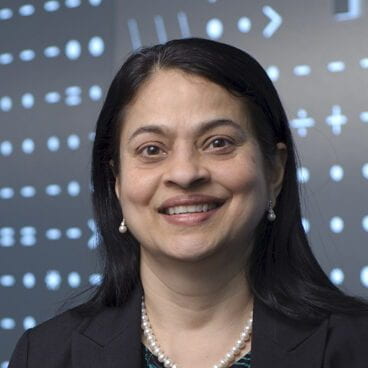
Anuradha Agarwal
Principal Research Scientist, MIT Materials Research Laboratory
Dr. Anu Agarwal is a Principal Research Scientist at MIT’s Microphotonics Center and Materials Research Laboratory. Her work has focused on the technologies for the foundational components of electronic-photonic chips including polysilicon waveguides, LEDs, couplers, photodetectors, and optical buffers. Dr. Agarwal has led several research projects at the Microphotonics Center/Initiative for Knowledge and Innovation in Manufacturing (IKIM) at MIT, since its inception. Her prior research includes the integration of active and passive optical components on silicon, using standard Si-CMOS fabrication processes. As a part of this research, she developed, evaluated, and later confirmed, the utility of polycrystalline silicon material for waveguide applications. She also developed a design for a graded-index chip-to-fiber edge coupling scheme.
Faculty & Instructors
Prof. Juejun Hu
John F. Elliott Professor, Professor of Materials Science and Engineering
Professor Juejun Hu’s research group develops novel materials and devices that harness light-matter interactions across a broad range of applications, including on-chip sensing and spectroscopy. Leveraging digital Fourier transform technology, the group has built miniaturized, rugged sensors that are compatible with mass production for industrial process control, medical imaging, and space systems.
Dr. Nick Fahrenkopf
Executive Director / Technical Director, AIM Photonics
Chris Striemer is the Director of Test, Assembly and Packaging Operations for AIM Photonics at the Test, Assembly and Packaging facility in Rochester, NY where he coordinates projects with members and customers to most efficiently leverage the institute’s advanced packaging, metrology, and testing capabilities for their prototype designs in order to help drive them toward commercial success. Previously, he founded and led product development at two silicon technology companies in specializing in optical biosensing and microfluidics. Chris has published numerous papers along with collaborators across the industry in fields ranging from solar cell optical coatings to ultrathin membranes to label-free biomolecular detection. He earned a B.S. in Electrical and Computer Engineering from the University of Buffalo and M.S. and Ph.D. degrees from the University of Rochester.
Prof. Jifeng Liu
Associate Professor, Thayer School of Engineering at Dartmouth
Jifeng Liu is an Associate Professor at Dartmouth College. His major research field includes integrated Si photonics for ultralow energy photonic datalinks, as well as nanomaterials and nanostructures for solar thermal and solar photovoltaics.
Prof. Lionel C. Kimerling
Thomas Lord Professor of Materials Science and Engineering, Director of the MIT Microphotonics Center
Lionel Kimerling is the Thomas Lord Professor of Materials Science and Engineering at MIT and the founding Director of the MIT Microphotonics Center, where he conducts an active research program in the design and processing of semiconductor materials and devices. He is the Strategic Advisory Board Executive for Education and Workforce Development at AIM Photonics, and also serves as Executive of the AIM Photonics Summer Academy.
Prof. Stefan Preble
Professor of Microsystems Engineering, Rochester Institute of Technology (RIT)
Stefan Preble is a Professor in the Kate Gleason College of Engineering at the Rochester Institute of Technology. He is an expert in silicon photonic devices and circuits and is working to implement the technology in high performance computing, communication and sensing systems
Prof. Guillermo Carpintero del Barrio
Full Professor at Carlos III University of Madrid (UC3M) / Affiliated Professor at IMDEA Networks
Guillermo Carpintero is professor and head of Optoelectronics and Laser Technology Group at Universidad Carlos III de Madrid. His research focuses on photonic integrated circuits for millimeter-wave and Terahertz signal generation and processing, for ultrabroadband wireless systems, large antenna arrays and high frequency instrumentation and measurement. Has coordinated three European projects in microwave photonics, from the first fully integrated monolithic millimeter-wave transmitter (iPHOS) to a 4×4 broadband antenna transmitter array (TERA6G); including packaging and assembly of high frequency systems within the Chips Chair EPICPack and PIXEurope Pilot Line.
Prof. Duane Boning
Franklin C. Hurlbut Professor of Electrical Engineering and Computer Science, MIT
Duane Boning’s research focuses on understanding and modeling variation in IC, photonic, and MEMS processes, devices, and circuits. He earned his undergraduate and graduate degrees from MIT, where he is currently Professor of EECS, and where he serves as Co-Director of the MIT Leaders for Global Operations (LGO) program, the MIT Machine Intelligence for Manufacturing and Operations (MIMO) effort, and as Associate Director of the MIT Microsystems Technology Laboratories (MTL).
Prof. Dirk Englund
Professor of Electrical Engineering and Computer Science, MIT
Dirk Englund earned his Ph.D. in Applied Physics at Stanford University in 2008. After a postdoctoral fellowship at Harvard University, he joined Columbia University as Assistant Professor of E.E. and of Applied Physics. He joined the MIT EECS faculty in 2013. Recent recognitions include the 2011 PECASE, the 2011 Sloan Fellowship in Physics, the 2012 DARPA Young Faculty Award, the 2017 ACS Photonics Young Investigator Award, and the OSA’s 2017 Adolph Lomb Medal, a Bose Research Fellowship in 2018, and a 2020 Humboldt Research Fellowship.
Dr. Ryan Hamerly
Research Scientist, MIT / NTT Research
Ryan Hammerly is a research scientist at NTT PHI Labs and a visitor at MIT with Prof. Dirk Englund. He earned his Ph.D. in Applied Physics from Stanford University in 2016, for work with Prof. Hideo Mabuchi on quantum control, nanophotonics, and nonlinear optics. In 2017 he was at the National Institute of Informatics (Tokyo), working with Prof. Yoshihisa Yamamoto on quantum annealing and optical computing concepts.
Dr. Alex Meng
Researcher / Industry Expert in Integrated Photonics Systems
Alex Meng is a professor at Columbia University and Technical Director of the JUMP 2.0 Center for Ubiquitous Connectivity. His research focuses on photonic devices and systems, spanning foundational technologies and their integration into next-generation computing and communication platforms.
Prof. Thomas Brown
Professor, Director of the Institute of Optics at the University of Rochester
Thomas Brown is professor and director of the Institute of Optics at the University of Rochester. His research focuses on polarized light in free space optics and waveguides, stress engineered optical elements, and the discovery of new metrology methods for photonic integrated circuits.
Dr. Ben Miller
Professor of Dermatology, Biochemistry and Biophysics, Biomedical Engineering, and Optics, University of Rochester
Ben Miller is the Dean’s Professor of Dermatology, Biochemistry and Biophysics, Biomedical Engineering, and Optics at the University of Rochester. Miller is a founder of Adarza BioSystems, Inc., and the Academic Lead for Integrated Photonic Sensors in AIM Photonics.
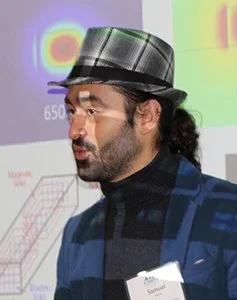
Prof. Samuel Serna
Associate Professor of Physics and Photonics and Optical Engineering, Bridgewater State University
Samuel Serna is an Associate Professor in the Department of Physics and Photonics and Optical Engineering at Bridgewater State University, where he leads research in integrated photonics with applications in packaging, sensing, and nonlinear optics; he is also a visiting professor at MIT. He is an OPTICA Member and has served on the SPIE Editorial Board.
Principal Research Scientist, MIT Materials Research Laboratory
Dr. Anu Agarwal is a Principal Research Scientist at MIT’s Microphotonics Center and Materials Research Laboratory. Her work has focused on the technologies for the foundational components of electronic-photonic chips including polysilicon waveguides, LEDs, couplers, photodetectors, and optical buffers. Dr. Agarwal has led several research projects at the Microphotonics Center/Initiative for Knowledge and Innovation in Manufacturing (IKIM) at MIT, since its inception. Her prior research includes the integration of active and passive optical components on silicon, using standard Si-CMOS fabrication processes. As a part of this research, she developed, evaluated, and later confirmed, the utility of polycrystalline silicon material for waveguide applications. She also developed a design for a graded-index chip-to-fiber edge coupling scheme.
Prof. Samuel Serna
Co-Principal Investigator, Assistant Professor of Physics, Photonics and Optical Engineering
Dr. Serna and BSU are part of the LEAP network, bringing industry, government and academia together for the use of integrated photonics and optical technologies. Dr. Serna is an Assistant Professor at BSU since September 2019.
Dr. Randolph Kirchain
Co-Principal Investigator, Principal Research Scientist and Co-Director of MIT Concrete Sustainability Hub
Dr. Kirchain’s research and teaching explores the impact of materials-technology decisions on the economic and environmental performance of the products into which those materials are transformed and the systems in which they are produced, used, and eventually discarded.
Dr. Elsa Olivetti
Mission Director, MIT Climate Project
Elsa Olivetti is Associate Dean, MIT School of Engineering; Jerry McAfee Professor in Engineering; Professor, Department of Materials Science and Engineering; and Strategic Advisor of the MIT Climate and Sustainability Consortium. Her passion for addressing issues related to climate change frames the focus of her research, which centers on improving the environmental and economic sustainability of materials in the context of growing global demand.
Dr. Sajan Saini
Instructional Desginer, Worforce Development
Dr. Sajan Saini received his doctoral degree in materials science at MIT in 2004, during which he investigated materials and device designs for optically pumped waveguide amplifiers in silicon microphotonics.
Dr. Pradnya Nagarkar
Technical Program Manager
Technology and Silicon Etching
Research Staff
Juejun Hu
John F. Elliott Professor of Materials Science and Engineering
Professor Juejun Hu’s research group focuses on novel materials and devices to exploit interactions of light with matter. Their work covers a wide spectrum of applications, including on-chip sensing and spectroscopy. Capitalizing on a digital Fourier transform technology, Professor Hu and his research group colleagues have created miniaturized and rugged sensors that can be mass produced for industrial process control, medical imaging, and space applications.
Aristide Gumyusenge
Henry L. Doherty Career Development Professor in Ocean Utilization, Assistant Professor of Materials Science and Engineering
Professor Aristide Gumyusenge’s research background and interests are in semiconducting polymers, their processing and characterization, and their role in the future of electronics. Particularly, he has tackled long-standing challenges in operation stability of semiconducting polymers under extreme heat and has pioneered high-temperature plastic electronics. At MIT, Professor Gumyusenge’s research group, OMSE Lab, focuses on developing novel organic semiconducting materials and using them to build organic electronic devices and body-machine interfaces.
Timothy Swager
John D. MacArthur Professor of Chemistry
Dr. Swager’s research is broadly focused on synthetic, supramolecular, analytical, and materials chemistry. He is interested in a spectrum of topics with an emphasis on the synthesis and construction of functional assemblies.
Gregory Norris
Research Scientist, Director, SHINE (the Sustainability and Health Initiative for NetPositive Enterprise) at MIT
Dr. Norris directs SHINE (the Sustainability and Health Initiative for NetPositive Enterprise) at MIT. His research focuses on advancing and applying methods for Net Positive sustainability: creation and assessment of positive social and environmental “handprints” that exceed the actor’s footprints.
Elizabeth Unger
Research Scientist
Dr. Beth Unger is a distinguished Research Scientist at the Massachusetts Institute of Technology (MIT). Dr. Unger’s expertise spans across several key sectors, including advanced manufacturing, ready-mix concrete, and photonics. Her work in workforce development within these areas has been instrumental in addressing labor shortages and skills gaps, particularly through her efforts in curriculum design and professional training programs.
Ajay Gupta
Postdoctoral Associate
Author of materials, energy systems, and ecology research and evaluation for policy-makers. Study and modelling of techno-economic analysis (TEA) and life cycle analysis (LCA) for secondary recovery of rare earth metals and energy return on investment (EROI) of economies.
Jesus Castro-Esteban
Postdoctoral Associate
Jesús obtained his BSc at the Universidade da Coruña (Spain). Afterwards, he moved to Santiago de Compostela (Spain), where he completed his MSc and PhD at CiQUS, in the group of Prof. Diego Peña and Prof. Dolores Pérez. Throughout his PhD program, he has worked on the design and synthesis of distorted polyarenes, such as helicenes, and graphene nanostructures.
Thomas Deucher
Graduate Student
Thomas Deucher is a materials science and engineering PhD student in the Electronic Materials Research Group at MIT. He received his undergraduate degree in materials science and engineering from Purdue University. His research interests revolve around pushing material limitations, specifically within device fabrication and extreme environments. Currently, he is working to develop photonic packaging architectures to optimize chip-to-chip and fiber-to-chip coupling in large scale manufacturing.
Elizabeth Gower
Graduate Student
Lizzie Gower is an Electrical Engineering and Computer Science (EECS) pursuing her doctorate at MIT as part of the MIT and Woods Hole Oceanographic Institution (WHOI) Joint Program. She is a part of the Photonic Materials Group and being advised by Dr. Anu Agarwal and Dr. Lionel Kimerling. She received her master’s in EECS from MIT and WHOI under the supervision of Dr. Anna Michel: her thesis focused on low-cost in situ gas sensors for ocean applications. Her work with Dr. Agarwal focuses on the design, development, and test of photonic integrated circuits for environmental and biological chemical sensing.
Virtual Manufacturing (VM-Lab) Team
Trevor Morrisey
Software Developer, Resource Efficiency Games and Simulations
Trevor Morrisey is the lead software developer for the VM-Lab project. He joined IKIM in June, 2018.
Jaymie Krambeck
Software Developer, Resource Efficiency Games and Simulations
Brief bio about this team member goes here.
Ryan Chadwick
Project Manager and Game Designer
Ryan Chadwick is a multidisciplinary game developer and creative lead with more than 15 years of industry experience and 11 shipped games. Working across art direction, UI/UX design, game design, and production, he brings a versatile, hands-on approach to building and delivering games. Experienced in small and mid-sized teams, he has led major UI features, produced hundreds of game assets, managed external art partners, and contributed to marketing and community development. Known for his thoughtful design sensibility, clear communication, and collaborative leadership, Chadwick combines creative problem-solving with practical production experience to help teams build engaging player experiences and bring projects across the finish line.